Many bee species nest individually in soil or cavities. Local nesting needs differ, so protect existing habitat before adding a bee house.
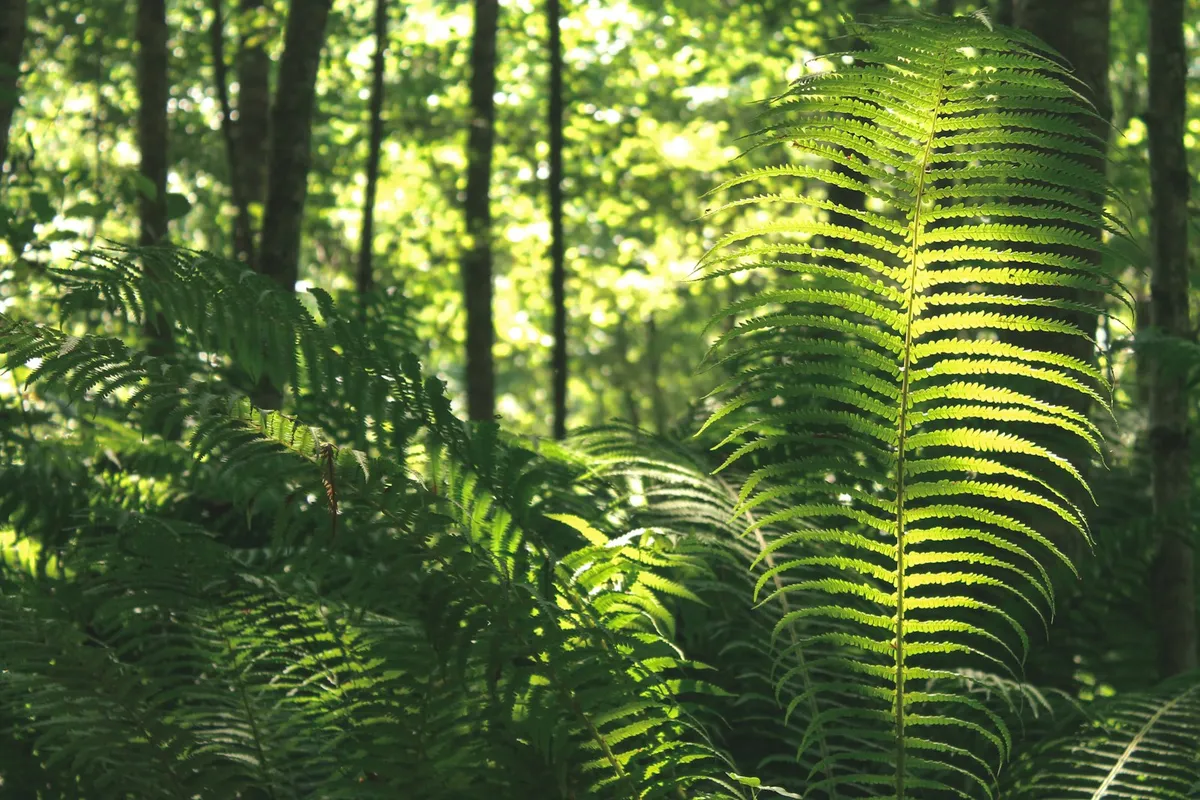
The photograph is an illustrative woodland image, not a bee nest. Sources include North American examples; species and nesting seasons differ elsewhere.
A different kind of home
A beehive is a familiar symbol of a busy garden. It is only one way bees live. In many solitary bee species, an individual female prepares and provisions a nest rather than living in a honey-bee-style colony. The US Geological Survey’s pollinator science strategy describes this as the pattern for most bee species, while noting that some, such as bumble bees, form social colonies.
Solitary does not mean that every nest is far from another. Suitable spaces can be clustered. It also does not mean a bee is harmless in every circumstance: observe from a respectful distance and never handle an unidentified insect or disturb a nest.
Soil, stems and sheltered spaces
Different bees use different places. The Xerces Society’s nesting guide describes ground nesters that need access to soil, as well as cavity nesters that use spaces in dead wood or plant stems. Its examples are mainly North American; the bees and suitable habitat in Thailand or another region may differ.
If you have a safe, stable patch of ground that is not being cultivated, consider observing it before covering or disturbing it. Avoid creating bare soil where it could wash away or conflict with local safety and land-management rules. A patch is an opportunity, not a guarantee that bees will nest there.
Why mulch can be a trade-off
Mulch can protect soil and retain moisture, but a thick layer may also make some ground-nesting sites inaccessible. You do not need to choose one rule for an entire garden. Around a plant, use mulch where it suits the soil and plant; elsewhere, an undisturbed opening may be worth keeping if it is appropriate locally. Our mulch guide explains the growing-side trade-offs.
Pesticides are another consideration. Residues and drift can affect flowers or nesting areas, so identify a problem before treating it and consult local product directions. Our pollinator garden guide discusses exposure and local plant choices in more detail.
Native depends on place
“Native” describes a relationship between a species and a region, not a label for every bee that lives outdoors. The USGS explains that the European honey bee was introduced to North America and can compete with native bees there. That North American example should not be turned into a claim that all honey bees are non-native everywhere; Asia also has native honey bee species.
A managed hive is therefore not a substitute for understanding the locally occurring pollinators and their needs. A local natural-history group, university or conservation organization can help you find information relevant to your region.
Watch without turning one visit into a conclusion
Choose one plant or patch and write down the date, weather and what you can actually see. A bee entering a hole may be investigating or nesting; one observation alone cannot confirm its species, nest status or role in pollination. Repeat your notes from a distance and compare them with the small garden field notebook. Curiosity is most useful when it leaves room for uncertainty.
Sources & further reading
- USGS · Pollinator Science Strategy, 2025–35 ↗
- Xerces Society · Nesting resources for pollinators ↗
- USGS · Are honey bees native to North America? ↗
This founding-edition article was drafted with AI assistance and checked against the sources above. It has not had independent expert review. Read our editorial approach.