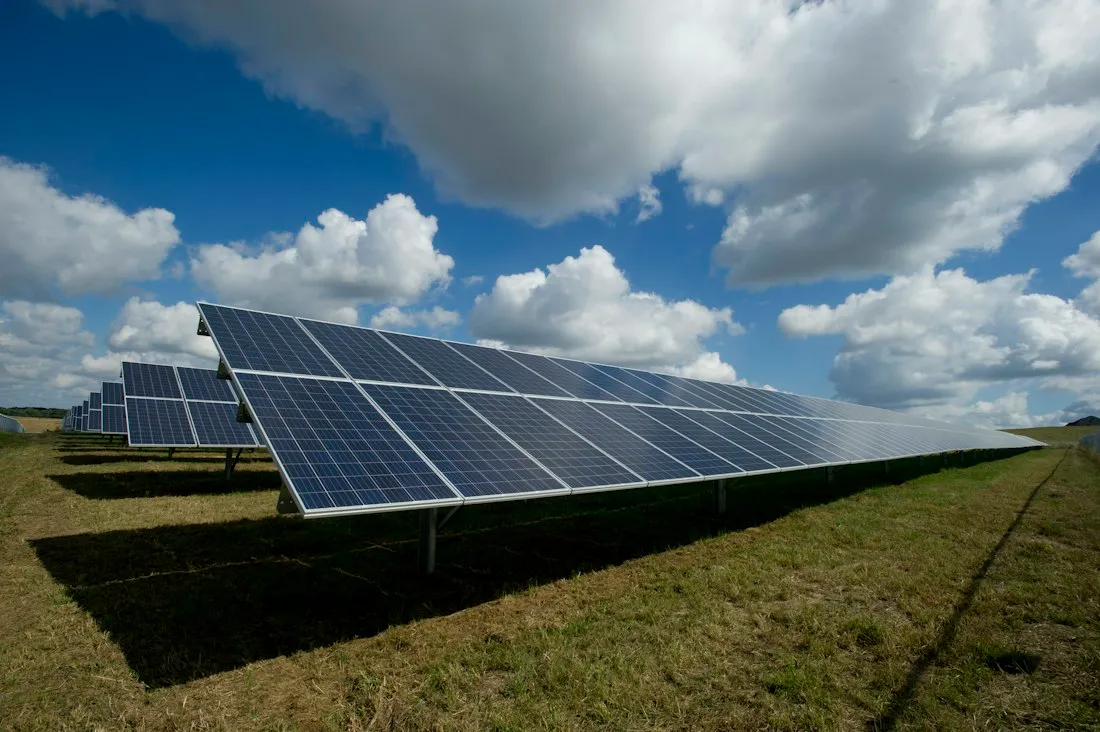
Photovoltaic cells convert light into electrical energy. Storage is a separate job, usually done by a battery system.
Begin with a material
A photovoltaic cell uses semiconductor material to convert incoming light into electrical energy. Connecting cells into modules makes a practical panel. Available sunlight and the characteristics of the system affect its output.
A panel is one part of a system
A working installation also needs suitable electrical connections, mounting, and equipment that manages the output. Many household systems use an inverter to convert direct current from the panels into alternating current. The exact architecture depends on the application.
Power and energy answer different questions
Power describes a rate; energy describes an amount accumulated over time. A 100-watt output maintained for two hours delivers 200 watt-hours before accounting for downstream losses. A panel’s rated power is measured under specified conditions, not a promise of constant real-world output.
What happens after sunset?
Panels do not store the sunlight they receive. Batteries can store energy for later use, and grid-connected systems interact with a wider electricity network. This is an explanation of the concepts, not a design or installation guide; system sizing requires location-specific inputs.
Sources & further reading
- US Department of Energy · Photovoltaic technology basics ↗
- US Department of Energy · Solar system design basics ↗
This founding-edition article was drafted with AI assistance and checked against the sources above. It has not had independent expert review. Read our editorial approach.