Identify the cause, watch how damage changes and consider useful insects before choosing a response. A damaged leaf does not automatically need a spray.
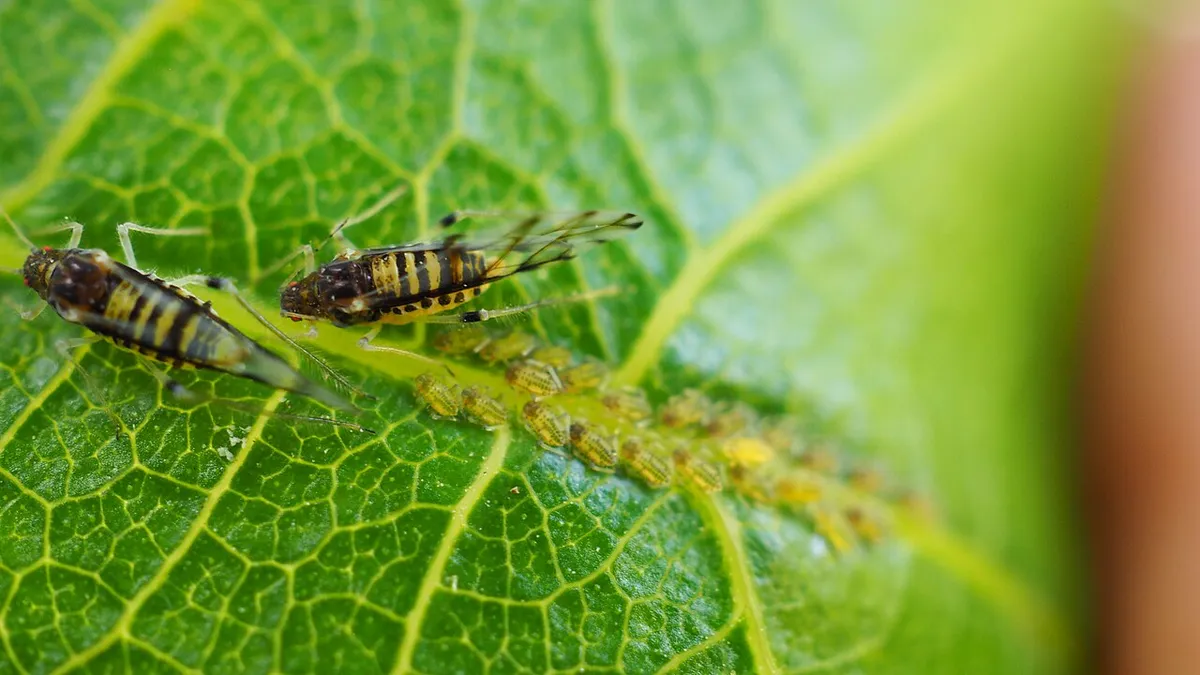
The image shows aphids; it is not a diagnosis of damage to a particular plant. Sources include California and Minnesota examples; local pests and pesticide rules differ.
Observe before you intervene
A chewed leaf can feel like an emergency. But a hole does not identify the animal that made it, show whether the animal is still there or tell you how much damage the plant will suffer. Begin by inspecting several leaves, including their undersides, and note whether new damage appears over the next few days.
This is part of integrated pest management, or IPM: University of California’s guide describes identifying and monitoring a problem, preventing it where possible, and selecting controls with attention to their effects on other organisms. The goal is to manage a real problem, not eliminate every insect.
Record what you can see
Write down the plant, the date, which leaves are affected and whether the marks are spreading. Photograph both the damage and any animal you find, without handling an unidentified insect. An insect on a leaf may be feeding on it, resting there or hunting something else; presence alone does not settle its role.
Check growing conditions too. Wilt, discoloration or leaf loss can have causes other than an insect. If you need help identifying a suspected pest or disease, compare photographs with advice from a local extension service or plant-health specialist. The species in California or Minnesota may not be the ones in your garden.
Decide whether action is needed
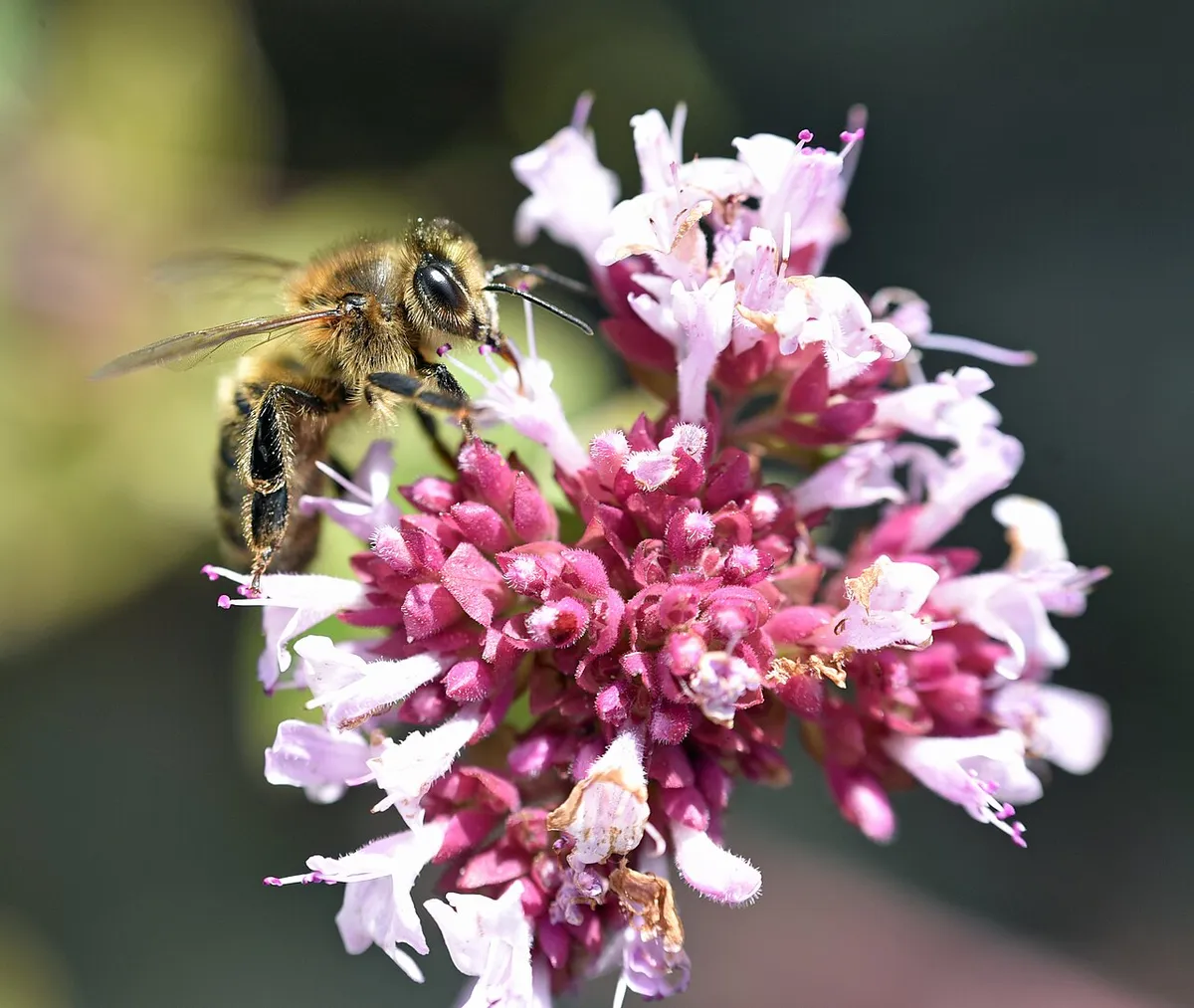
Many insects help gardens: predators and parasitoids can reduce some pest populations. Spraying without identification may also affect them. As one example, Minnesota Extension says aphids often cause little harm to plant health and treatment is frequently unnecessary. That is not a promise for every aphid, crop or situation; serious damage, vulnerable seedlings and disease risks require attention.
When action is appropriate, choose a method suited to the identified problem. Removing a small number by hand or using water on a sturdy plant may help in some cases. The UC guide recommends considering nonchemical methods and whether damage actually warrants treatment. If a pesticide is needed, follow the product label and local rules, including precautions for pollinators and edible crops; do not assume a homemade mixture is safe.
Look again
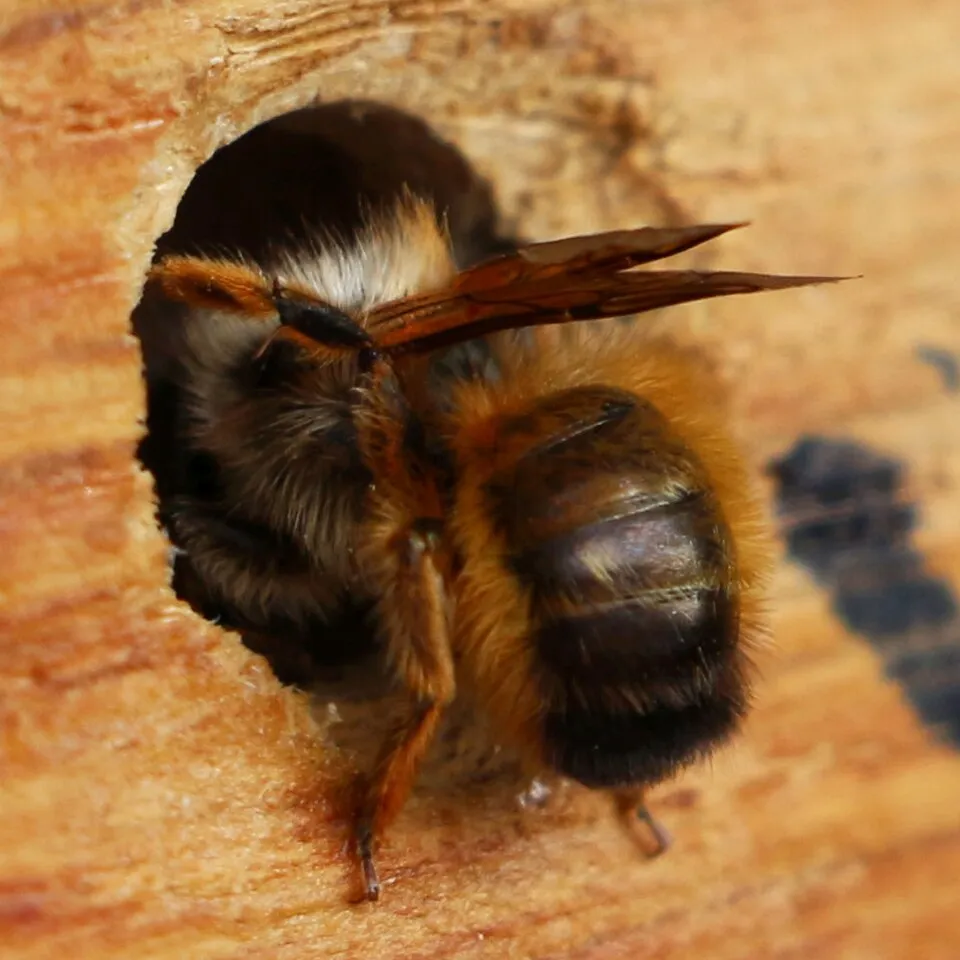
After any intervention, revisit the plant and record whether new damage slows. A single perfect leaf is not the measure of a healthy garden. For more on the insects you may want to protect, see our pollinator garden guide and solitary bee nesting guide.
Sources & further reading
- University of California IPM · What is integrated pest management? ↗
- University of California IPM · Understanding pesticides ↗
- University of Minnesota Extension · Aphids in home yards and gardens ↗
This founding-edition article was drafted with AI assistance and checked against the sources above. It has not had independent expert review. Read our editorial approach.