A seed needs the right conditions for its species. Check moisture, temperature, light and timing before deciding that the seed is dead.
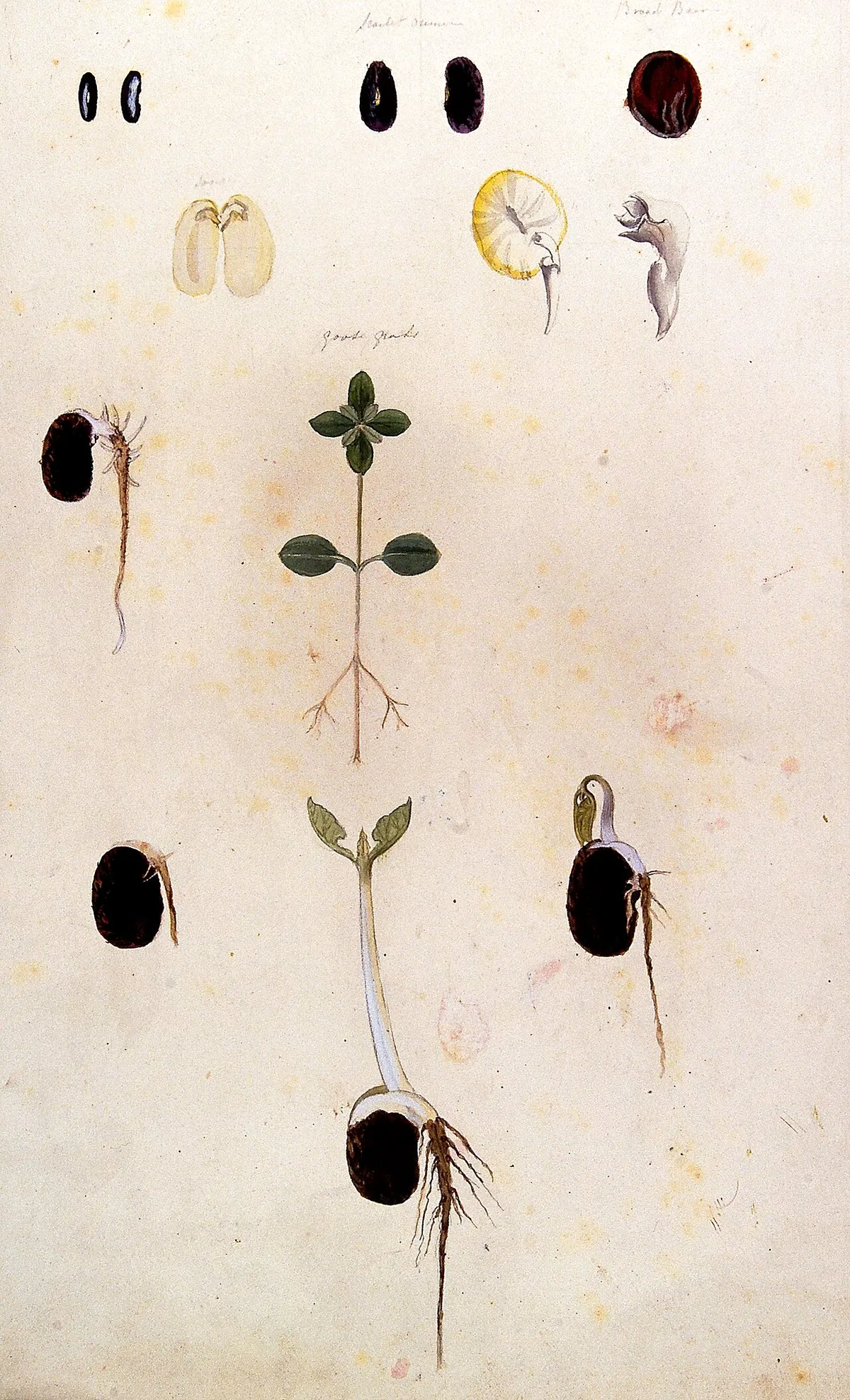
The cover is a historical botanical illustration. Seed requirements differ by species; the cited indoor-starting guidance was written for Minnesota.
A quiet tray is a clue, not a verdict
You sow a tray, water it and wait. Nothing appears. Before emptying it, check the seed packet: some species need more time than others, and the surface can hide a seed that has only just begun to grow. Note the sowing date and the conditions rather than assuming a missed deadline means failure.
Penn State Extension describes germination as dependent on suitable moisture, oxygen, temperature and, for some species, light conditions. Those requirements vary. A warm room is not proof that the growing mix is at the temperature a particular seed needs.
Moist is not the same as waterlogged
Water starts processes inside the seed, but the seed also needs access to oxygen. Growing mix that stays saturated can restrict air around it. On the other hand, a misted surface can look damp while the mix beneath is dry. University of Minnesota Extension recommends keeping seed-starting mix moist and warns about that dry-under-the-surface problem.
Use a container with drainage, water gently so seeds do not wash away, and check below the surface. Avoid repeatedly digging around every seed: handling a sprouting root can damage it. Our guide to why roots need air explains the same air-and-water balance for growing plants.
Depth and temperature matter
Read the packet or a reliable guide for the exact plant. Some seeds need light to germinate; others need darkness, so a universal instruction to bury every seed deeply does not work. Once seedlings emerge, they need suitable light to grow; a seed’s germination requirement and a seedling’s light needs are different questions.
Some seeds are dormant and need particular conditions before they can germinate. Penn State describes several kinds of dormancy, so do not chill, heat or scratch an unknown seed just because another plant benefits from it. Follow guidance for the species and handle any electrical equipment safely.
Make the next attempt informative
If you try again, label the variety, sowing date and conditions. Compare a small batch with fresh seed of the same kind if you have it. Old or poorly stored seed may have lower viability, but a poor result alone cannot tell you whether age or the growing environment was responsible. For seed you saved yourself, keep the collection year and storage history with the label; our bean seed guide shows what to record.
Sources & further reading
- Penn State Extension · Seed and seedling biology ↗
- University of Minnesota Extension · Starting seeds indoors ↗
This founding-edition article was drafted with AI assistance and checked against the sources above. It has not had independent expert review. Read our editorial approach.