The terraces connect water, farming and community knowledge; their age is debated, and their value does not depend on one date.
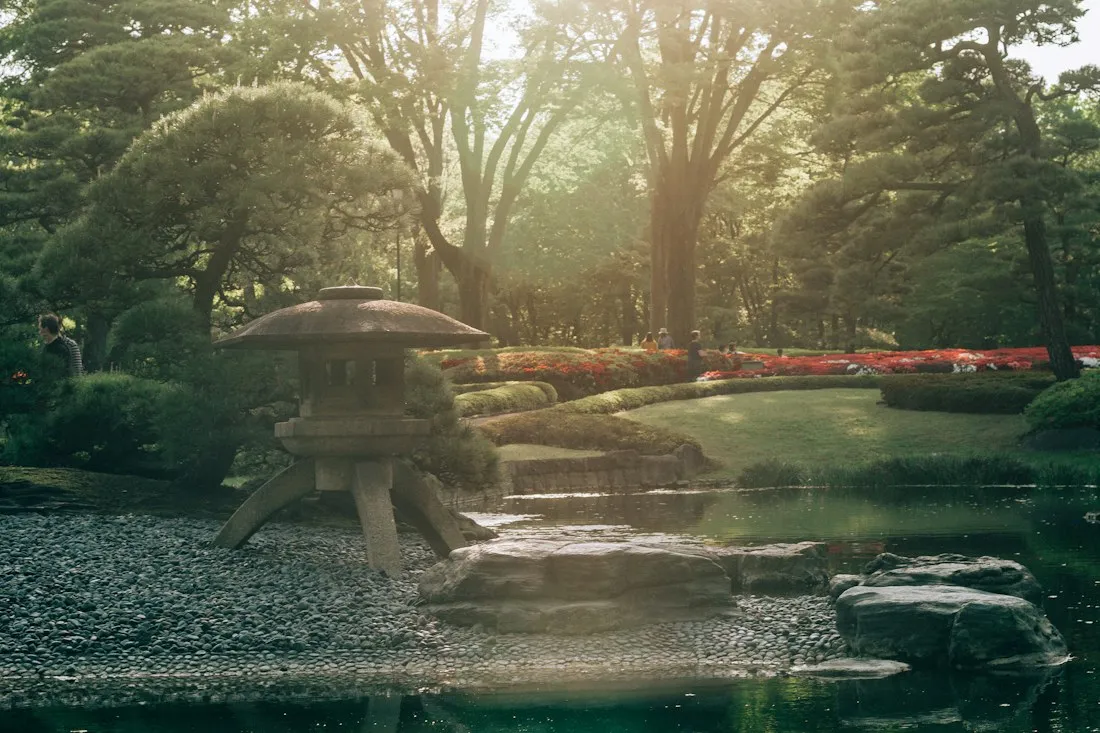
The photograph is an illustrative garden image, not a photograph of the Ifugao terraces. This article synthesizes published sources and does not claim local reporting.
Look beyond the postcard
Rice terraces can look like repeating green lines on a mountainside. The view is only one part of the story. In the northern Philippine Cordillera, Ifugao farming communities have shaped and maintained terraces as places to grow food, manage water and pass on knowledge.
UNESCO’s World Heritage listing describes five inscribed terrace clusters in four municipalities. They are part of a wider landscape, not a single identical field. Their histories and present-day circumstances should not be reduced to one photograph or a single story about all Ifugao people.
A field is connected to a watershed
The listing describes terraced fields supported by stone or earth walls and supplied by irrigation systems that draw water from forested mountain areas. The field, its wall, the water route and the land above it belong in the same explanation. If a channel or wall needs repair, maintaining a terrace involves more than planting rice.
This is a way to understand the relationship, not a construction manual. Water allocation and maintenance are shaped by local conditions and community arrangements; a visitor cannot infer the full working system from the view alone. It connects with our broader question about gardens as cultural landscapes: who makes the choices, and who carries out the work?
How old are the terraces?
The answer is contested. UNESCO’s listing describes a history reaching back about two millennia. A 2017 paper by Stephen Acabado, Marlon Martin and Francisco Datar reviews earlier estimates and presents archaeological and other evidence for a more recent history of rice terracing. A separate research article on Ifugao seed selection also describes the long-running debate.
These sources do not make the competing claims identical, and a date from one investigated location cannot automatically date every terrace in the region. They give readers a reason to ask what was dated, which evidence supports a claim and whether a source is discussing people, cultivation or a particular structure. The landscape’s cultural and practical importance does not depend on choosing the oldest estimate.
The work continues
UNESCO identifies pressures including changes in livelihoods, migration and water availability. Some terraces continue to be cultivated and maintained; others have been abandoned or temporarily fall out of use. Those are circumstances to understand with the people who live and work there, not evidence that a living culture is frozen in the past or inevitably disappearing.
The 2017 archaeology paper describes collaboration with Ifugao communities and the sensitivity of changing established historical narratives. Its account is one contribution to a larger conversation, not a substitute for all community voices. When reading about heritage, look for whose knowledge is represented, how people participate in decisions and whether conservation supports their livelihoods.
A question to take home
Choose a growing place you know: a balcony pot, a shared garden or a farm. Trace where its water comes from and who maintains it. Then ask what you do not yet know. The exercise does not make that place equivalent to the Ifugao terraces; it is a way to notice the connections that a landscape photograph can leave out.
Sources & further reading
- UNESCO · Rice Terraces of the Philippine Cordilleras ↗
- Acabado, Martin and Datar · Ifugao Archaeology (2017) ↗
- Kevin M. Murphy · A quiet harvest (2017) ↗
This founding-edition article was drafted with AI assistance and checked against the sources above. It has not had independent expert review. Read our editorial approach.