A working irrigation channel depends on shared decisions, maintenance and local knowledge as well as the movement of water.
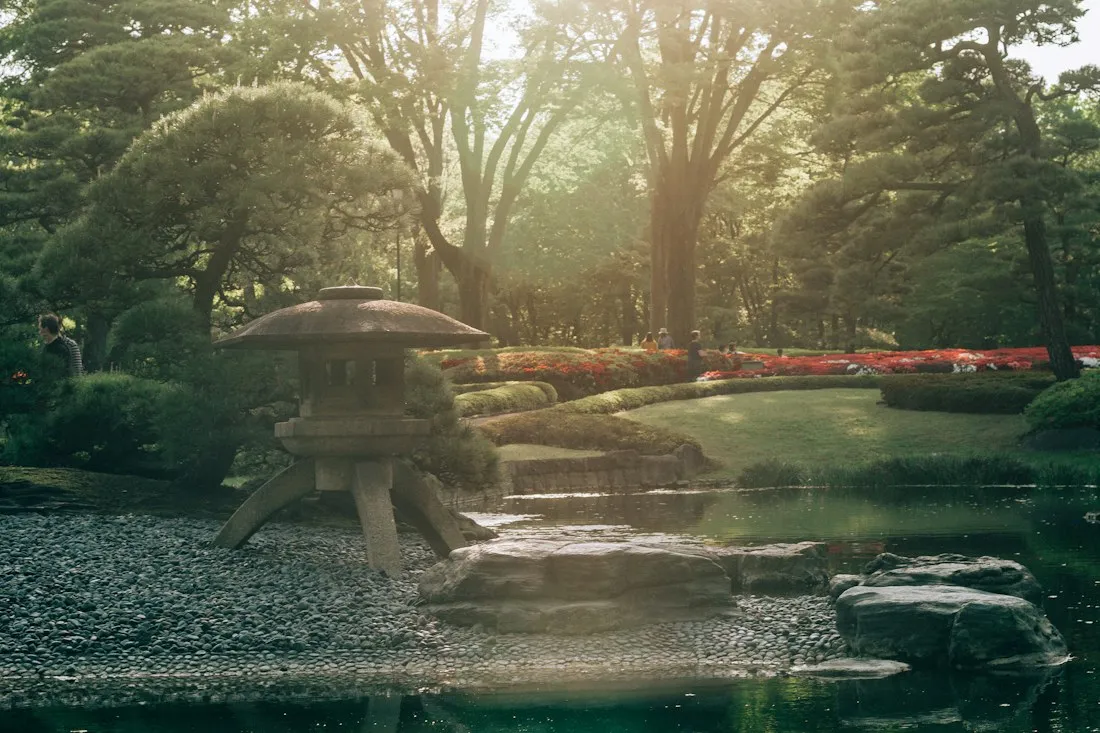
The photograph is an illustrative garden image; it does not show either irrigation system discussed. This is a source-based introduction, not local reporting.
Follow the water—and the decisions
A channel carries water, but someone must decide when to open it, who receives it and how it is maintained. Those decisions can be as important as the shape of the channel. They also connect practical growing knowledge with the customs and relationships of a place.
This story looks at two documented examples. It does not suggest that all traditional irrigation systems work alike, or that an account written for a heritage listing can represent every person who uses them.
Channels and schedules in Europe
In 2023, UNESCO inscribed an element called Traditional irrigation: knowledge, technique and organization on its Representative List of the Intangible Cultural Heritage of Humanity. The nomination came from Austria, Belgium, Germany, Italy, Luxembourg, the Netherlands and Switzerland.
The decision describes gravity-fed channels and ditches that bring water from sources such as springs and streams to fields. Practitioners choose times to divert water and cooperate in maintaining structures. Knowledge can be passed on by observing and learning from experienced people, as well as through associations and institutions. The description covers a nominated set of practices in those countries; it is not a description of every irrigation system in Europe.
Water temples and subak in Bali
The UNESCO World Heritage listing for Bali’s cultural landscape describes subak as a cooperative system connecting water management, rice cultivation and water temples. It relates the landscape to Tri Hita Karana, a Balinese philosophical concept involving the spiritual, human and natural worlds.
The Food and Agriculture Organization also describes cooperation among farmers in managing water. These accounts are institutional sources; they are a starting point for learning, not a substitute for hearing the experiences of the people involved in a particular subak.
Similar questions, different places
Both examples invite questions about water, timing and collective work. They are not interchangeable. The European inscription groups several nominated practices; the Bali listing concerns a particular cultural landscape and its institutions. Geography, beliefs, ownership and the people maintaining each system matter.
Compare them with the Ifugao rice terraces story, which looks at a different Philippine landscape and a debate about its history. A useful comparison makes differences visible rather than turning distinct communities into a single general “ancient technique.”
A question for your own growing place
Trace the water used by a pot, shared garden or farm. Where does it come from? Who decides when it is used, and who repairs the equipment? The answer may be simple, but asking makes the work behind a growing place visible. It does not make that place equivalent to either heritage example.
Sources & further reading
- UNESCO · Traditional irrigation, 2023 decision ↗
- UNESCO · Cultural Landscape of Bali Province and the subak system ↗
- FAO · Balinese farmers, subak and livelihoods ↗
This founding-edition article was drafted with AI assistance and checked against the sources above. It has not had independent expert review. Read our editorial approach.