Changing where plant families grow can reduce pressure from some soil-borne diseases, but it is one tool among several and is not a guarantee.
In this story
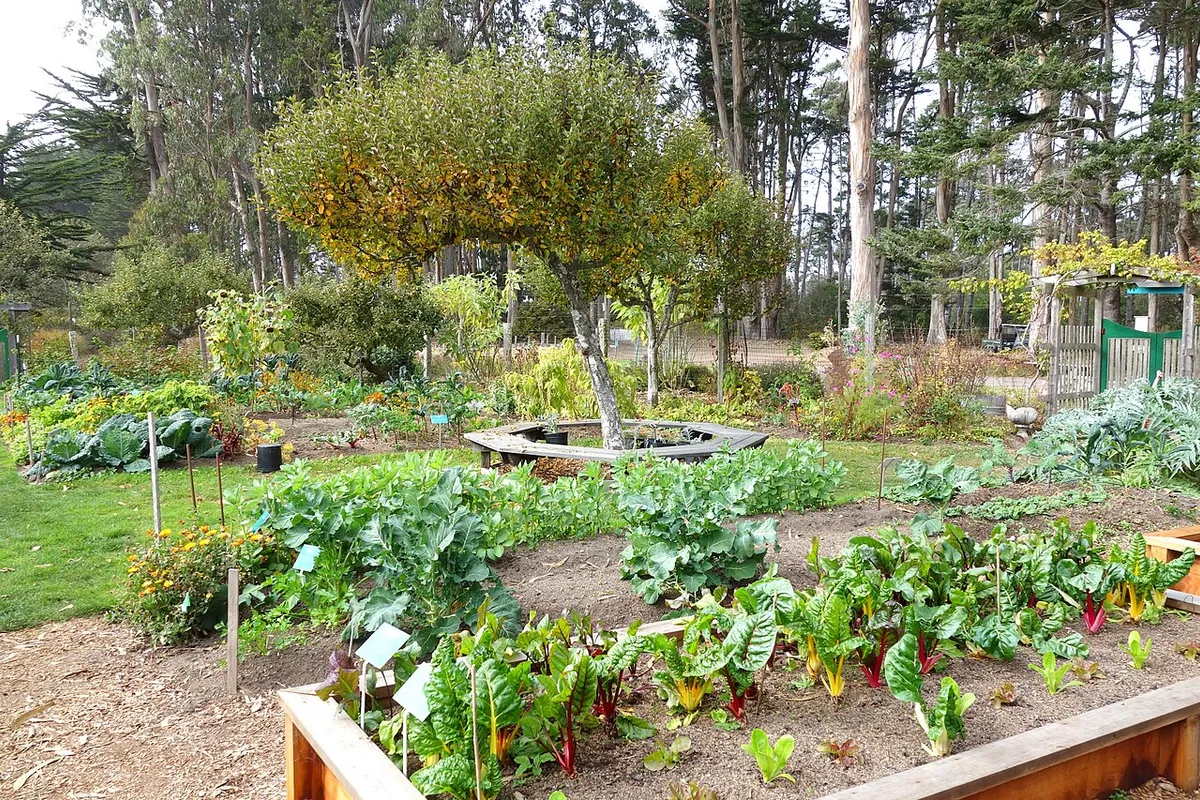
The photograph illustrates a vegetable garden; it does not document a crop-rotation sequence. Extension examples are from the United States, so growing seasons and disease risks differ by location.
Why a tomato followed by a pepper may not be a rotation
If tomatoes grew poorly in one bed, it is natural to try something different there next season. But a pepper is a relative of the tomato. Some diseases and pests can affect several plants in the same family, so changing the crop’s name does not always change its vulnerability.
The idea behind crop rotation is to change which plant families occupy a particular patch over time. It can help reduce the buildup of some diseases that persist in soil or plant debris. It cannot eliminate every problem or replace healthy seed, suitable soil and careful observation.
A small family map
Start with the plants you actually grow. University of Minnesota Extension groups familiar vegetables like this:
- Tomato family: tomato, pepper, eggplant and potato.
- Cabbage family: cabbage, kale, broccoli, bok choy and radish.
- Squash family: cucumber, pumpkin and other squash.
- Bean family: beans and peas.
For example, following a tomato with kale changes families; following it with eggplant does not. That change is a planning choice, not proof that either plant will be disease-free. Check a reliable plant guide if you are unsure of a crop’s family.
Make a plan you can use
Draw the beds or label the pots and record what grew in each place, with dates. If you have three separate beds, one possible starting sequence is tomato family, then cabbage family, then bean family. Continue the record before deciding what to plant next. In climates with several growing seasons per year, record the actual dates rather than assuming that a single season equals a year.
For many home-garden diseases, the Minnesota guide suggests avoiding the same plant family in a location for two to four years. That is regional general guidance, not a promise that every pathogen disappears after a fixed interval. When a particular disease is identified, ask a local plant clinic or extension service about its host range and survival.
Know where rotation falls short
Some pathogens have long lives in soil or affect crops across several families. The Minnesota account of Phytophthora capsici describes a disease that can affect squash-family crops as well as peppers, tomatoes, eggplants and beans. Switching between those families alone may not solve that specific problem. The page is written for farms and notes that the disease is not common in Minnesota home gardens; do not use a general example to diagnose your plants.
On a balcony or in a very small plot, moving a pot by a few metres may not separate plants from a flying pest. Reusing the same growing mix or moving contaminated soil between pots can also complicate the plan. Penn State Extension notes that family relationships are useful but some unrelated plants can share diseases too.
Start with one observation
Keep a simple note of the crop, date, location and any symptoms before replacing a plant. Pair the plan with healthy planting material, appropriate spacing and attention to water. Our guide to observing garden pests helps distinguish a symptom from a diagnosis, while understanding your soil introduces another piece of the growing picture.
Sources & further reading
- University of Minnesota Extension · Managing plant diseases in the home garden ↗
- Penn State Extension · Plant rotation based on plant families ↗
- University of Minnesota Extension · Managing phytophthora on farms ↗
This founding-edition article was drafted with AI assistance and checked against the sources above. It has not had independent expert review. Read our editorial approach.